.svg)



.avif)
.avif)


.avif)
In this post, we deal with Section 3A of the IT Act — the 2008 Amendment that introduced Schedule II electronic signatures.
Recap: Two types of electronic signatures
Section 2(ta) of the IT Act sanctifies two types of electronic signatures: an electronic technique specified in the Second Schedule of the IT Act (elaborated in Section 3A), and a digital signature (elaborated in Section 3).
Before 2008: First there was only one
Before 2008, only digital signatures under Section 3 existed. Section 3 provides a technology-specific framework that could not account for technological changes.

2008 Amendments: Legislating flexibility
Parliament amended the IT Act in 2008 to introduce a technology neutral framework. The enabling provision created was Section 3A of the IT Act.
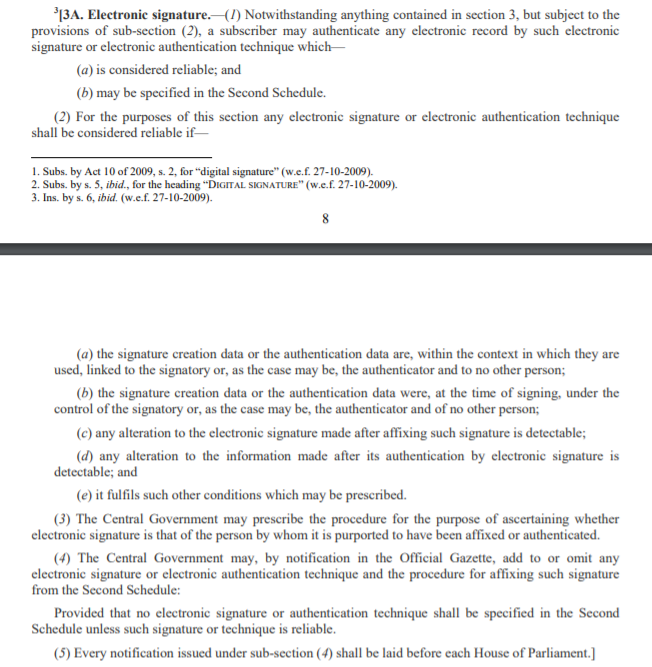
The Central Government initiates Schedule II insertions
Any insertion to Schedule II does not need to be originated by an Act of Parliament. The Central Government simply notifies an addition and lays the notification before Parliament for scrutiny.
Changing digital signature to electronic signature
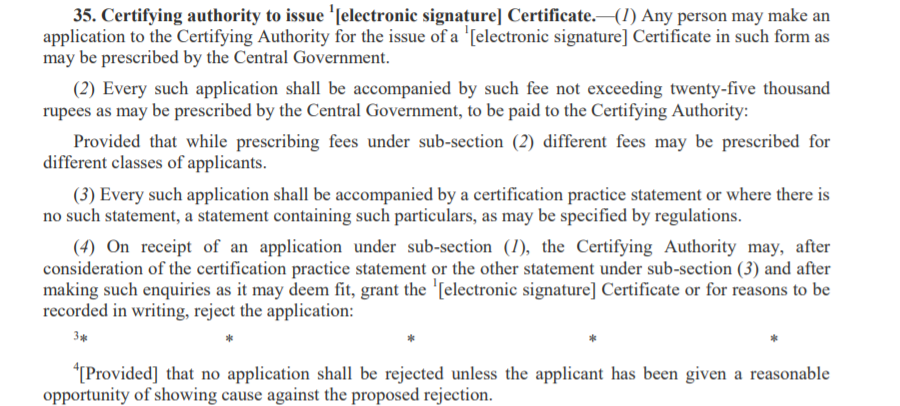
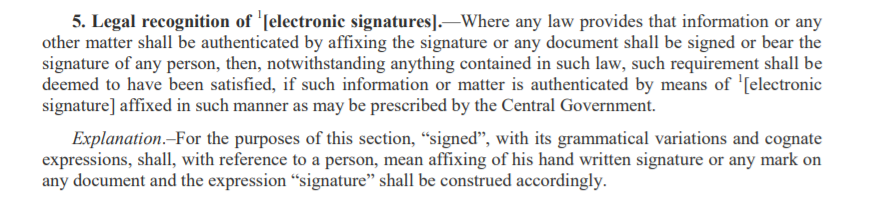
The 2008 Amendments also changed references from digital signature to electronic signature throughout the IT Act, subsuming digital signatures within the broader concept of electronic signatures.

Is Schedule II Listing Optional?
Many harbor a misconception that electronic signatures need not be listed in Schedule II as long as they are reliable. This is incorrect — Schedule II listing is mandatory.


The most common Second Schedule signature is the Aadhaar eSign, which democratized electronic signatures for everyone in India.